NEURAL MECHANISMS ONLINE
  • Home
  • WebinarSeries
    • WebinarSeries2025
    • WebinarSeries2024
    • WebinarSeries2023
    • WebinarSeries2022
    • WebinarSeries2021
    • WebinarSeries2020
    • WebinarSeries2019
    • WebinarSeries2018
  • (Web)Conferences
    • Book symposium
    • ISPSM Conference
    • NCFM Conference
    • AISC-mid term 2019
  • How to connect
    • Troubleshooting
  • The team
  • Publications
  • VideoLectures
    • Free Will (short)
    • Mereological Fallacies (short)
    • Philosophy and Neuroscience (Roskies)
    • Neuroethics (Sinnott-Armstrong)
    • Memory (De Brigard)
    • Folk Psychology (Figdor)
    • Measuring Brain Function (Poldrack)
    • Explanation in Neuroscience (Chirimuuta)
  • Subscribe

12 July, Beate KRICKEL & Matej KOHAR [WEBINAR]

7/4/2019

0 Comments


12 July 2019
15-17 - Greenwhich Mean Time 

(check your local time here)

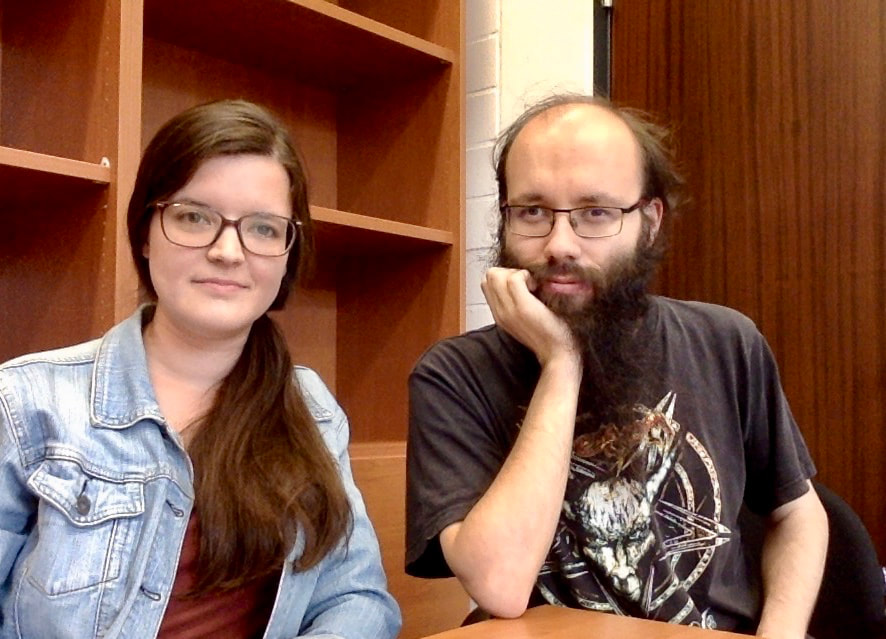
Beate KRICKEL & Matej KOHAR

(Ruhr University Bochum)

Compare and Contrast:
​how to assess the completeness of mechanistic explanation 

Join us online!
Picture
Subscribe to NM!

Abstract

Opponents of the new mechanistic account of scientific explanation argue that the new mechanists are committed to a ‘More Details Are Better’ claim: adding details about the mechanism always improves an explanation. Due to this commitment, the mechanistic account cannot be descriptively adequate as actual scientific explanations usually leave out details about the mechanism. In reply to this objection, defenders of the new mechanistic account have highlighted that only adding relevant mechanistic details improves an explanation and that relevance is to be determined relative to the phenomenon-to-be-explained. Craver and Kaplan (2018) provide a thorough reply along these lines specifying that the phenomena at issue are contrasts. In this paper, we will discuss Craver and Kaplan’s reply. We will argue that it needs to be modified in order to avoid three problems, i.e., what we will call the Odd Ontology Problem, the Multiplication of Mechanisms Problem, and the Ontic Completeness Problem. However, even this modification is confronted with two challenges: First, it remains unclear how explanatory relevance is to be determined for contrastive explananda within the mechanistic framework. Second, it remains to be shown as to how the new mechanistic account can avoid what we will call the ‘Vertical More Details are Better’ objection. We will provide answers to both challenges.


0 Comments


Leave a Reply.

  • Home
  • WebinarSeries
    • WebinarSeries2025
    • WebinarSeries2024
    • WebinarSeries2023
    • WebinarSeries2022
    • WebinarSeries2021
    • WebinarSeries2020
    • WebinarSeries2019
    • WebinarSeries2018
  • (Web)Conferences
    • Book symposium
    • ISPSM Conference
    • NCFM Conference
    • AISC-mid term 2019
  • How to connect
    • Troubleshooting
  • The team
  • Publications
  • VideoLectures
    • Free Will (short)
    • Mereological Fallacies (short)
    • Philosophy and Neuroscience (Roskies)
    • Neuroethics (Sinnott-Armstrong)
    • Memory (De Brigard)
    • Folk Psychology (Figdor)
    • Measuring Brain Function (Poldrack)
    • Explanation in Neuroscience (Chirimuuta)
  • Subscribe